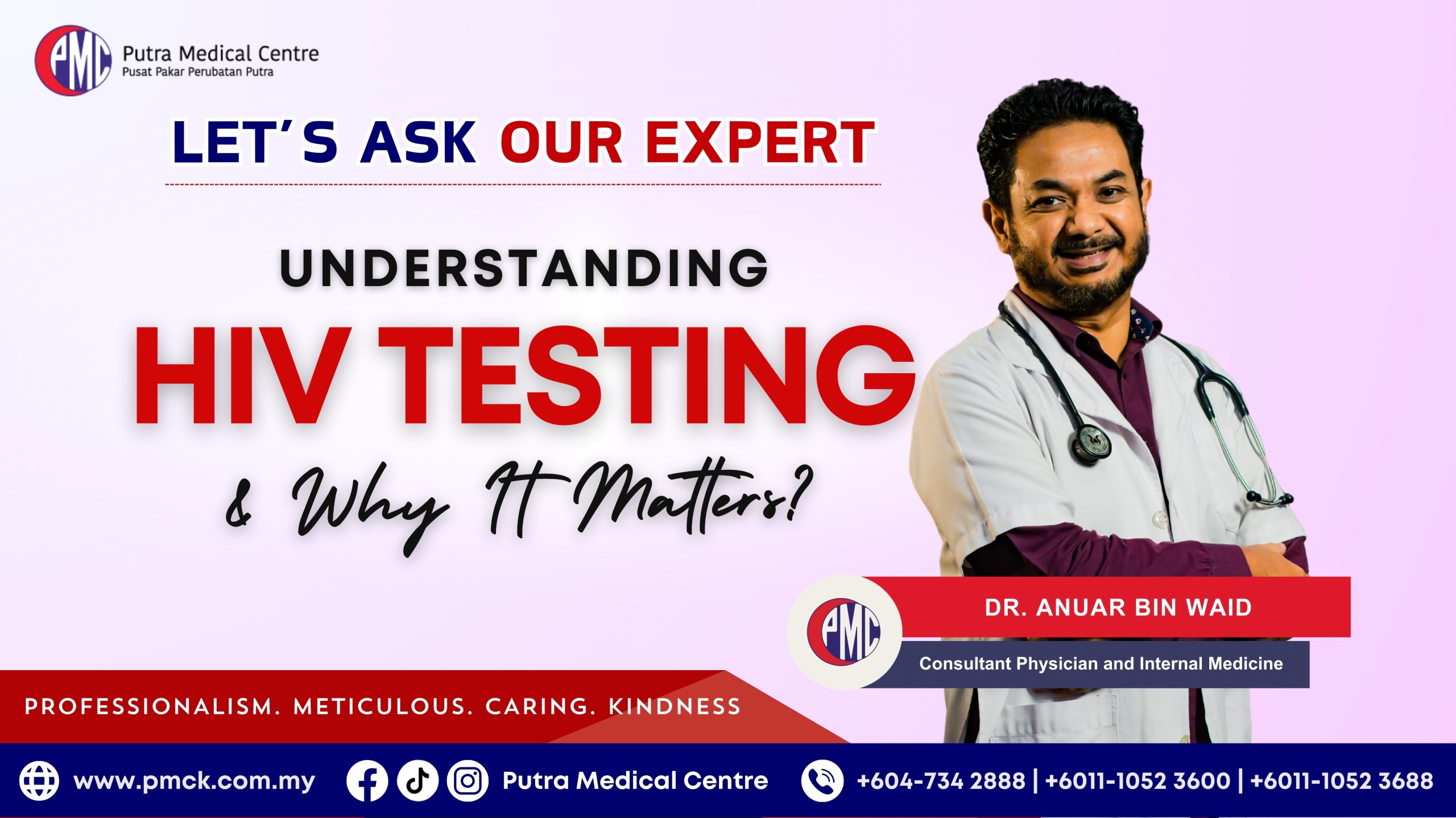
Resident Consultant Physician and Internal Medicine, Dr. Anuar Bin Waid
Welcome to another edition of the Ask Our Expert series, where Putra Medical Centre (PMC) shares clear, trustworthy health information to support families across Kedah and northern Malaysia. In this article, Dr. Anuar Bin Waid, a resident consultant physician in internal medicine at PMC, discusses why HIV testing is an important part of personal and community health and what Malaysians should know about screening, prevention, and early care.
What is HIV?
Human Immunodeficiency Virus (HIV) affects the body’s immune system, particularly the CD4 cells that help fight infections. Without treatment, HIV can progress over time to Acquired Immunodeficiency Syndrome (AIDS). Early diagnosis enables individuals to access timely care and reduces the risk of complications.
Why HIV Testing Matters?
Dr. Anuar explained that many people with HIV may not experience symptoms for years. Because of this, the only way to know your HIV status is through testing. Early screening provides several benefits:
- It allows healthcare providers to monitor and protect the immune system.
- It reduces the likelihood of transmitting the virus to others.
- It helps individuals access appropriate treatment and counselling.
- It supports public health efforts to reduce new infections in Malaysia.
Testing is particularly recommended for sexually active adults, pregnant women, and individuals who may have had potential exposure.
Types of HIV Tests
Dr. Anuar shared that HIV tests are designed to detect the virus or the body’s response to it. Common tests include:
1. Antibody Tests
These tests detect antibodies produced by the body after HIV exposure. The window period is typically between several weeks and a few months.
2. Antigen/Antibody Combination Tests
These tests look for both HIV antibodies and the p24 antigen. They may detect infection earlier than antibody-only tests.
3. Nucleic Acid Tests (NAT)
These tests detect the virus directly through viral RNA. NATs are usually used in specific circumstances, such as early potential exposure or when symptoms raise concern.
Understanding A Positive Result
If an initial test is positive, it is always confirmed with a second test to ensure accuracy. Dr. Anuar explained that individuals who receive a confirmed positive result will be guided through the next steps, including counselling, treatment, and follow-up care. Antiretroviral therapy (ART), when taken consistently, can help control the virus and support long-term health outcomes.
Maintaining Confidentiality
Dr. Anuar emphasised that HIV screening in regulated healthcare settings follows strict confidentiality standards. Test results are shared only with authorised healthcare professionals involved in the patient’s care. This protects the individual’s privacy, dignity, and emotional wellbeing.
Reducing The Risk of HIV Transmission
Several steps can help reduce the risk of HIV transmission:
- Practising safe sex, following healthy lifestyle, socially and individually, including correct condom use.
- Avoiding the sharing of needles or sharp objects.
- Following safe medical and procedural practices.
- Seeking medical advice promptly after potential exposure.
- Discussing PrEP (Pre-Exposure Prophylaxis) or PEP (Post-Exposure Prophylaxis) with a qualified healthcare provider when appropriate.
Q&A: Understanding HIV Testing and Early Detection
Q: Why is HIV testing an important part of personal health?
A: Many individuals with HIV may not experience symptoms for a long time. Because of this, testing is the only reliable way to know your status. Early screening allows healthcare providers to monitor your immune system, offer timely treatment, and reduce the risk of transmitting the virus to others.
Q: What exactly does HIV do to the body?
A: HIV affects the immune system by targeting CD4 cells, which help the body fight infections. Without treatment, the immune system weakens over time. Early diagnosis can support better long-term health outcomes.
Q: What types of HIV tests are available in Malaysia?
A: According to our medical research, there are three commonly used tests:
- Antibody tests, which detect the body’s response to HIV.
- Antigen–antibody tests, which can identify infection earlier.
- Nucleic Acid Tests (NAT), used in certain situations to detect the virus directly. All positive screening tests must be confirmed with a second test for accuracy.
Q: If someone receives a positive result, what happens next?
A: The result will be verified through confirmatory testing. After that, individuals are guided through appropriate care, including counselling and treatment options such as antiretroviral therapy, which helps manage the virus.
Q: Are HIV test results kept confidential?
A: Yes. PMC emphasises that regulated healthcare facilities follow strict confidentiality standards. Only authorised healthcare professionals are permitted to access test results.
Q: How can individuals reduce their risk of HIV?
A: Safer sex practices, avoiding needle sharing, and seeking medical advice after potential exposure are important steps. Some individuals may also discuss PrEP or PEP with a qualified healthcare provider.
PMC: Supporting Community Health
PMC continues to provide educational resources and community health programmes to help individuals make informed decisions about screening and prevention. By creating safe spaces for discussion and learning, PMC supports families across Kedah in understanding important health topics with clarity and confidence.
About Putra Medical Centre (PMC)
Putra Medical Centre (PMC) in Alor Setar provides trusted medical services and preventive health programmes for communities across Kedah and northern Malaysia.
For 24-hour medical assistance:
Tel: +604 734 2888 | +6011 1052 3600 | +6011 1052 3688
Fax: +604 734 8882
Email: pmc@putramedicentre.com.my
Website: pmck.com.my
WhatsApp: https://wa.me/+60104551125
Disclaimer: This content is for general educational purposes only and does not replace professional medical advice, diagnosis, or treatment. If you experience urgent symptoms, seek immediate medical attention or call 999.
For further details, visit our official social media: