Digital Radiology Supporting Timely Patient Care. Modern imaging plays a quiet but critical role in patient care. Digital radiology and PACS help healthcare teams access and share medical images efficiently, supporting timely decisions and coordinated care at Putra Medical Centre, Alor Setar.
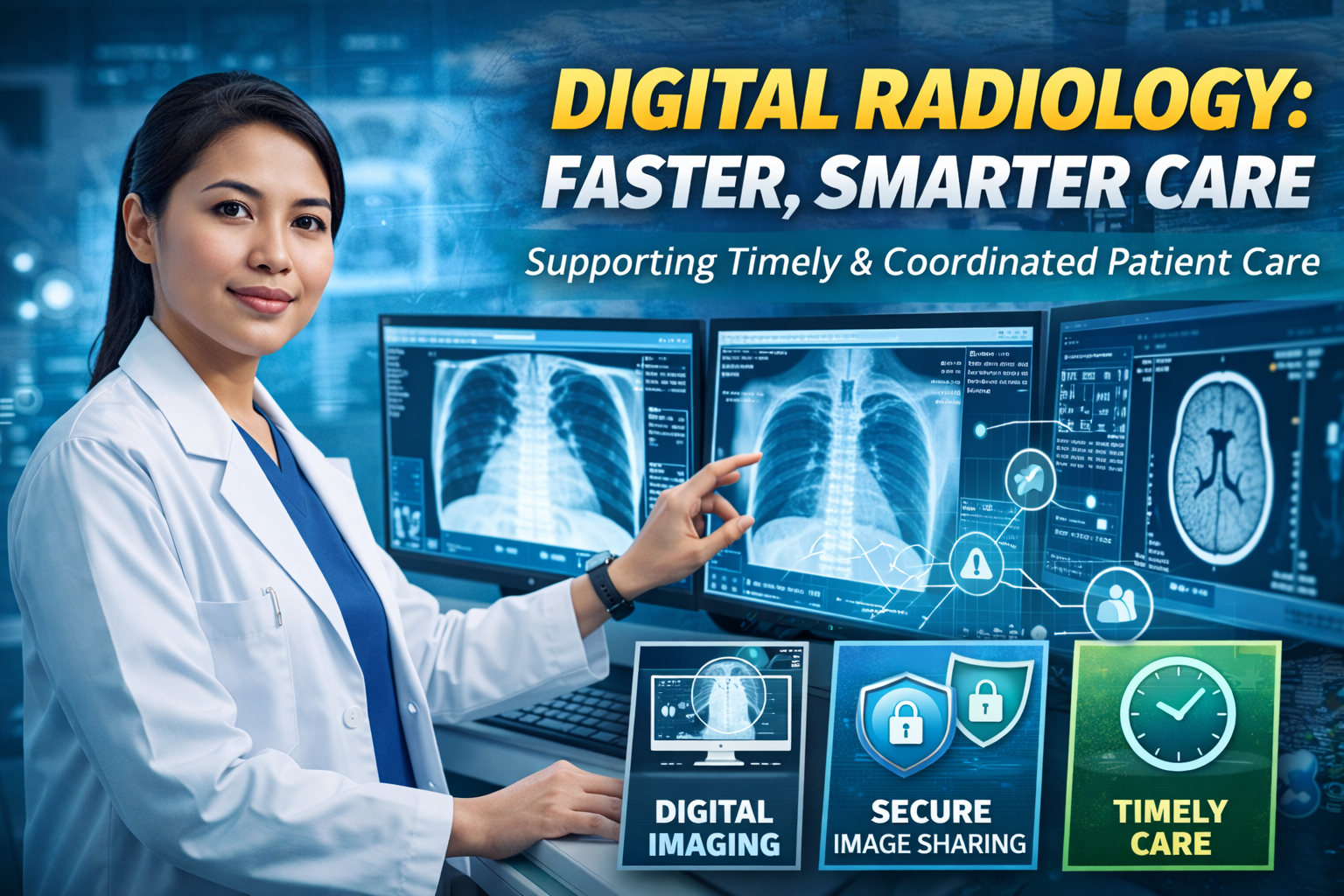
Advances in medical imaging continue to play an important role in how healthcare systems support timely and coordinated care. Digital radiology and Picture Archiving and Communication Systems (PACS) are increasingly used to improve the way medical images are stored, accessed, and shared within healthcare settings.
As healthcare needs grow, imaging services that support efficiency and continuity can help reduce administrative delays and improve workflow for clinical teams. Digital imaging systems allow medical images to be viewed securely by authorised healthcare professionals, supporting coordination across departments.
Understanding Digital Radiology and PACS
Digital radiology replaces traditional film-based imaging with electronic image capture and storage. PACS enables images to be archived and retrieved within a secure digital environment, reducing reliance on physical films and manual handling.
These systems are widely adopted in healthcare settings to support accuracy, consistency, and continuity in diagnostic processes. Their use reflects broader efforts within healthcare to integrate digital solutions responsibly and safely.
Addressing Common Misconceptions
Some members of the public may be unfamiliar with digital imaging systems or uncertain about how they work. In practice, these technologies are designed to support clinical workflows while maintaining established safety and quality standards.
Healthcare professionals trained in digital imaging systems continue to follow recognised protocols to ensure imaging is performed appropriately and interpreted accurately.
Looking Ahead
As healthcare delivery evolves, digital systems are one of several tools supporting patient care and service coordination. Public understanding of these technologies helps build confidence in how modern healthcare environments function.
Educational initiatives that explain healthcare technologies can contribute to better awareness and informed engagement with health services.
PMC: Supporting Diagnostic Services
Putra Medical Centre (PMC) in Alor Setar provides trusted medical services and preventive health programmes for communities across Kedah and northern Malaysia.
Putra Medical Centre Alor Setar (PMC) supports diagnostic services through the use of recognised medical imaging technologies, with a focus on continuity, coordination, and patient safety as part of broader healthcare delivery.
For 24-hour medical assistance:
Tel: +604 734 2888 | +6011 1052 3600 | +6011 1052 3688
Fax: +604 734 8882
Email: pmc@putramedicentre.com.my
Website: pmck.com.my
WhatsApp: https://wa.me/+60104551125
Disclaimer: This content is for general educational purposes only and does not replace professional medical advice, diagnosis, or treatment. Always seek advice from a qualified healthcare provider for personal concerns. If you experience urgent symptoms, seek immediate medical attention or call 999.
For further details, visit our official social media: