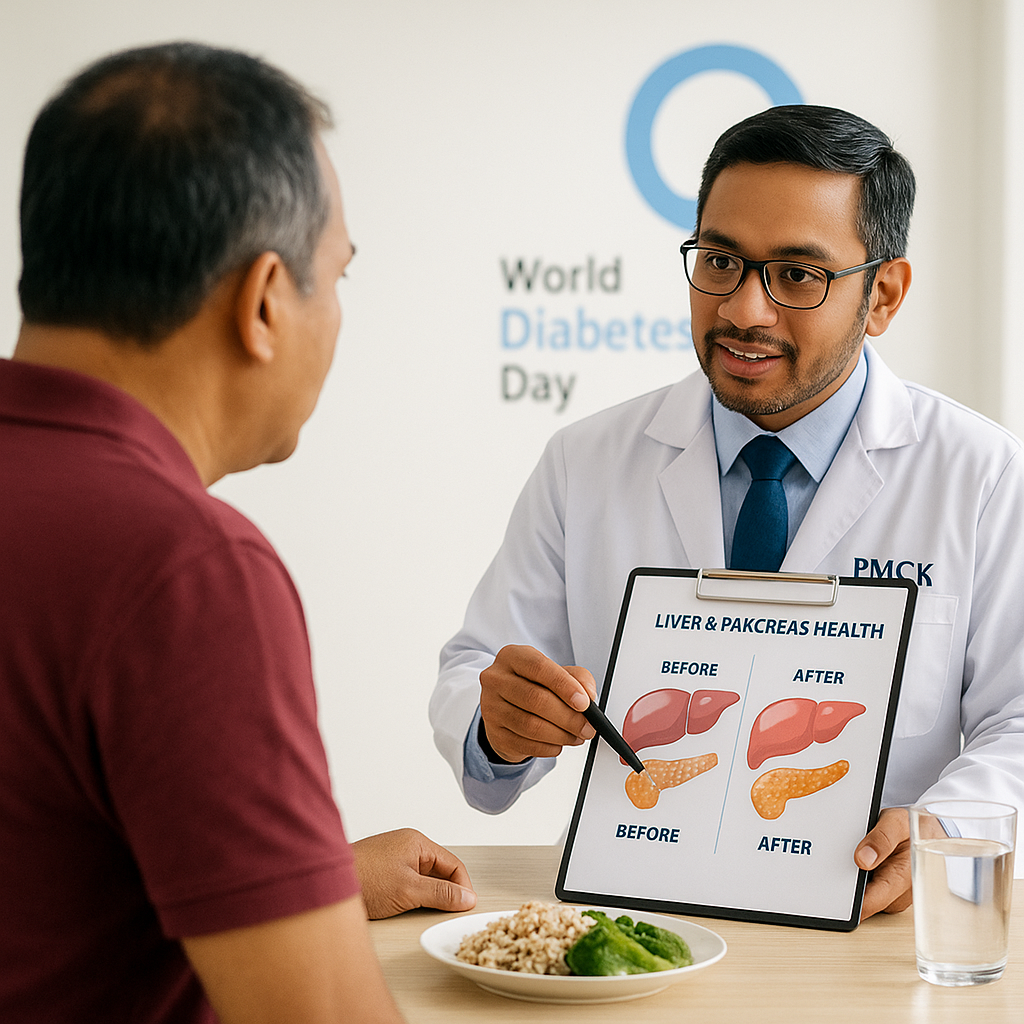
You’ve heard the words before: “You’ve got diabetes.” It appears on a screening form, during a check-up, or after a routine blood test. It’s a moment of shock that changes everything. But for many people, diagnosis isn’t the end of the story. It can be the beginning of a comeback.
In Malaysia, the burden of Type 2 diabetes remains high and continues to rise. Yet new research and clinical experience reveal a hopeful truth: under the right conditions, Type 2 diabetes can often be brought into remission, where blood sugar levels return to a healthier range and the need for medication may be reduced.
What “Reversing” Diabetes Really Means
“Reversing” diabetes does not mean a cure or a quick fix. It means achieving normal blood sugar control without the constant need for medication, a state known as remission.
According to experts at the Yale School of Medicine, “If you reverse insulin resistance, you reverse Type 2 diabetes”. Research from Newcastle University supports this: early in the disease, losing excess weight and adopting healthier habits can restore the liver and pancreas closer to normal function.
The key message: The earlier you act, the higher your chance of meaningful improvement.
Why This Matters for Malaysians
In Malaysia, food is love, from teh tarik to late-night suppers. But habits such as sugary drinks, white rice, and long hours of sitting quietly drive insulin resistance, the underlying process behind Type 2 diabetes.
What’s changing is how we approach it. It’s not only about managing the condition anymore; it’s about turning the tide through targeted lifestyle changes that reduce visceral fat, restore metabolic health, and improve insulin sensitivity.
As highlighted by National Geographic, “Type 2 diabetes is driven by largely reversible metabolic abnormalities.” That means many Malaysians can regain better health with the right support, even after diagnosis.
Steps Towards Diabetes Remission
Reaching remission takes time, consistency, and support, but every small step helps.
Here’s how to begin safely and sustainably:
-
- Lose excess belly fat. Research shows fat around the liver and pancreas plays a key role. Even moderate weight loss can make a difference.
- Eat with awareness. Choose whole-grain rice or smaller portions, add plenty of local vegetables such as kailan, ulam, and sawi, and opt for lean protein like tofu, fish, or chicken.
- Move more daily. A 30-minute brisk walk or breaking up long sitting hours helps boost insulin sensitivity.
- Screen and act early. The shorter the disease duration, the higher the chance of remission.
- Work with your healthcare team. Plans should be personalised. Some people will need medication; others may succeed with lifestyle adjustments
- Be consistent, not perfect. Progress happens one habit at a time. Sustained effort matters more than perfection.
PMC: Personalising Your Journey
“At Putra Medical Centre (PMC) in Alor Setar, we understand that living with diabetes is a lifelong journey that requires compassion, guidance, and teamwork,”
“Our multidisciplinary team, including doctors, dietitians, and nurses, works with each patient to design practical steps toward better health. Whether you are newly diagnosed or managing long-term diabetes, PMC is here to support you at every stage.”
Early screening and lifestyle support make a real difference. PMC offers comprehensive health screening packages and follow-up care to help individuals monitor, manage, and improve blood sugar control safely.
About Putra Medical Centre (PMC)
Putra Medical Centre (PMC) in Alor Setar provides trusted medical services and preventive health programmes for communities across Kedah and northern Malaysia.
For 24-hour medical assistance:
Tel: +604 734 2888 | +6011 1052 3600 | +6011 1052 3688
Fax: +604 734 8882
Email: pmc@putramedicentre.com.my
Website: pmck.com.my
WhatsApp: https://wa.me/+60104551125
Disclaimer: This content is for general educational purposes only and does not replace professional medical advice, diagnosis, or treatment. If you experience urgent symptoms, seek immediate medical attention or call 999.
For further details, visit our official social media: