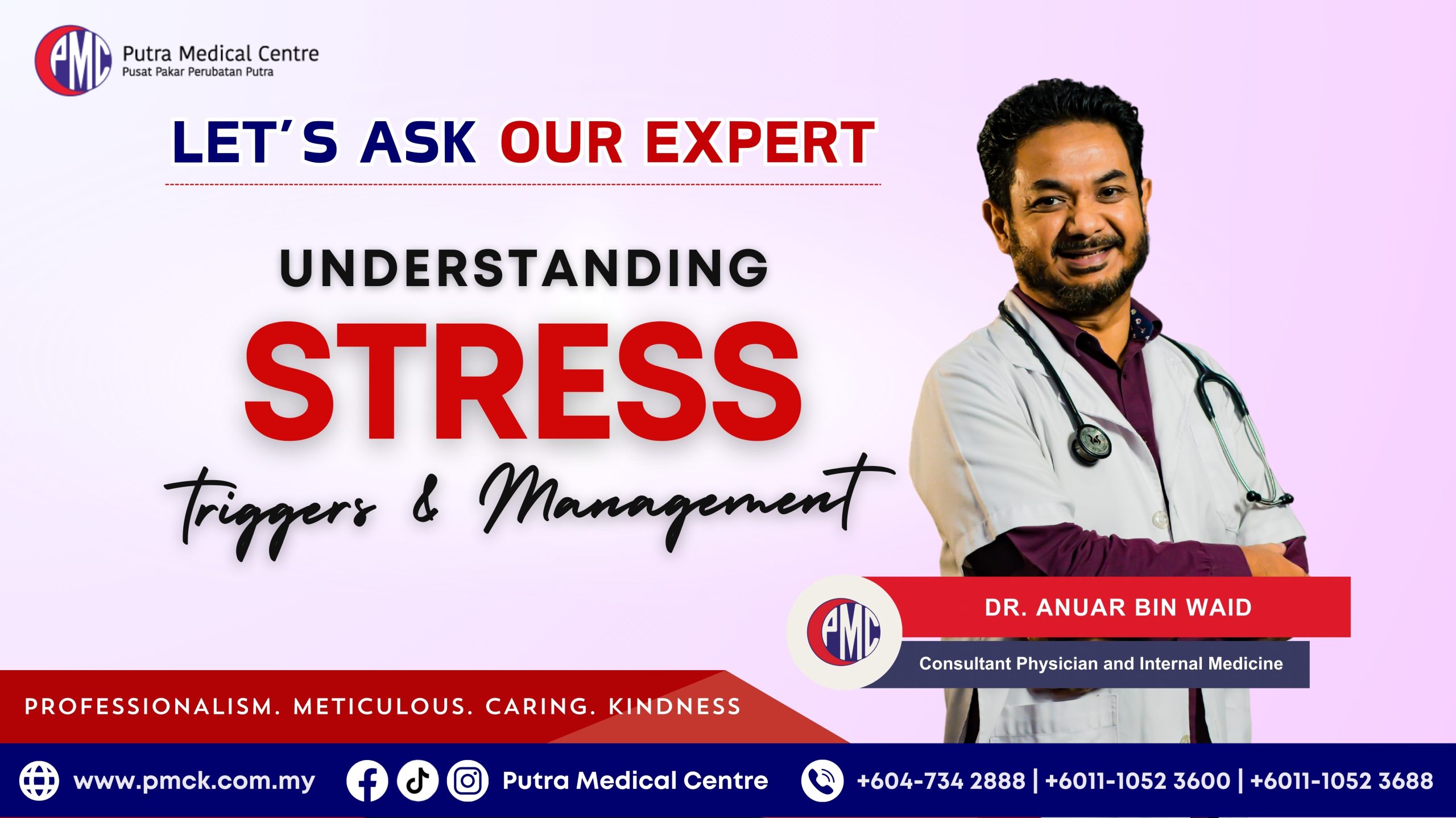
Welcome back to our Ask Our Expert series, where Putra Medical Centre (PMC) specialists share professional insights to help you live healthier and happier.
In this edition, we speak with Dr. Anuar Bin Waid, Resident Consultant Physician & Internal Medicine at PMC Hospital. With years of experience in internal medicine and lifestyle health, Dr. Anuar has helped many individuals understand and manage their stress through holistic medical care and lifestyle guidance.
Featuring Dr. Anuar Bin Waid, Resident Consultant Physician & Internal Medicine, PMC Hospital
Why Talk About Stress?
Stress is part of modern life, from work deadlines to financial worries and family responsibilities. While short-term stress can motivate us, chronic stress may lead to health issues such as high blood pressure, anxiety, insomnia, or weakened immunity.
Fast facts:
- Stress can increase your heart rate, blood pressure, and blood sugar.
- Chronic stress is linked to heart disease, diabetes, and depression.
- Managing stress improves focus, sleep, and emotional wellbeing.
Q&A with Dr. Anuar Bin Waid
Q: What are the common triggers of stress among Malaysians today?
Dr. Anuar: “Many people feel pressure from work, finances, or family responsibilities. In today’s digital world, constant notifications and social media comparisons also reduce rest time. Even health problems or poor sleep can trigger stress.”
Q: How does stress affect physical health?
Dr. Anuar: “When we’re stressed, our body releases hormones such as cortisol and adrenaline. Short-term stress helps us react faster. But when it’s continuous, these hormones stay high, causing fatigue, headaches, digestive problems, hypertension, and increased heart risks.”
Q: What are the warning signs that stress is becoming harmful?
Dr. Anuar: Everybody reacts to stress differently; however, “Watch for signs like these:”
- Constant tiredness or poor sleep
- Frequent headaches or muscle tension
- Irritability or poor focus
- Appetite or digestion changes
- Chest tightness or shortness of breath
“If these last for more than a few weeks, seek professional advice early.” For example, exercise, exams, and even occasional criticism at home are forms of stress. Short-term stress like this can actually make us stronger, mentally and physically. But if we’re constantly exposed to them without rest or balance, stress can become harmful rather than helpful.
Q: How can stress be managed effectively?
Dr. Anuar: “Start small, eat balanced meals, exercise regularly, and sleep enough. Try deep breathing, mindfulness, or prayer. Limit caffeine and screen time before bed. Talk to trusted friends or counsellors; sharing helps lighten emotional load.”
Q: Can stress-related problems be reversed?
Dr. Anuar: “Managing stress requires a total lifestyle change (T.L.C).
Start small, eat balanced meals, exercise regularly, and get enough sleep. Try deep breathing, mindfulness, or prayer to calm the body and mind. Limit caffeine and reduce screen time before bed.
Take occasional breaks from social media and digital devices; think of it as giving your mind and eyes a rest from constant stimulation. Constant scrolling and notifications create digital noise that keeps the body on alert.
Managing stress isn’t about quitting technology completely but about reclaiming control and choosing when and how to engage online.
Sharing your thoughts with trusted friends or counsellors also helps lighten the emotional load.”
Supporting Wellness at PMC
PMC Hospital’s Internal Medicine and Wellness team offers:
- Lifestyle and stress health screening
- Counselling and relaxation guidance
- Hypertension and diabetes management
- Sleep and heart health evaluation
A Note from Dr. Anuar
“Stress isn’t weakness; it’s your body asking for care. Taking time to rest and seek help shows real strength.”
If you experience ongoing stress, consult a qualified healthcare provider. PMC’s Internal Medicine & Wellness team can guide you on suitable screenings or care options.
About Putra Medical Centre (PMC)
Putra Medical Centre (PMC) in Alor Setar provides trusted medical services and preventive health programmes for communities across Kedah and northern Malaysia.
For 24-hour medical assistance:
Tel: +604 734 2888 | +6011 1052 3600 | +6011 1052 3688
Fax: +604 734 8882
Email: pmc@putramedicentre.com.my
Website: pmck.com.my
WhatsApp: https://wa.me/+60104551125
Disclaimer: This content is for general educational purposes only and does not replace professional medical advice, diagnosis, or treatment. If you experience urgent symptoms, seek immediate medical attention or call 999.
For further details, visit our official social media: